The Reserve Bank of India (RBI) on June 5, 2026, kept the policy repo rate unchanged at 5.25% and maintained its neutral monetary policy stance, citing rising global uncertainties, supply chain disruptions, and increasing energy prices. The decision was taken unanimously by the Monetary Policy Committee (MPC) during its meeting held from June 3 to June 5.
The RBI stated that while the Indian economy remains resilient and entered the current phase of global turbulence with stronger fundamentals than in previous crises, external challenges have increased risks to both growth and inflation.
Key Highlights
- RBI kept the repo rate unchanged at 5.25% and maintained its neutral monetary policy stance.
- India’s GDP growth forecast for FY27 was lowered to 6.6% due to rising global uncertainties and supply chain disruptions.
- CPI inflation is projected at 5.1% in FY27, with inflation expected to rise in the coming quarters because of higher energy and input costs.
- The RBI warned that elevated crude oil prices, the West Asia conflict, and global supply chain disruptions pose risks to growth and inflation.
- India’s economy remains resilient, supported by strong domestic demand, services activity, investment, and exports.
- The RBI announced measures to attract foreign capital, including easier investment norms for foreign investors and expanded access to government securities.
Growth Outlook Moderates as Global Risks Rise
India’s economy grew by 7.6% in FY 2025-26, supported by strong private consumption, fixed investment, and robust performance of the manufacturing and services sectors. Recent high-frequency indicators such as GST collections, PMI data, vehicle sales, and exports continue to suggest resilience in economic activity.
However, the RBI warned that elevated energy prices, global supply disruptions, and uncertainty arising from the ongoing West Asia conflict could weigh on economic activity in the coming months. The central bank also highlighted concerns over a forecast of below-normal southwest monsoon and the possibility of El Niño conditions affecting agricultural output and rural demand.
Taking these factors into account, the RBI projected India’s real GDP growth at 6.6% for FY 2026-27. Quarterly growth is expected at 6.6% in Q1, 6.3% in Q2, 6.5% in Q3, and 6.8% in Q4.
Inflation Expected to Rise Above Earlier Estimates
Consumer Price Index (CPI) inflation remained below the RBI’s target level during March and April 2026, coming in at 3.4% and 3.5%, respectively. However, the central bank expects inflationary pressures to strengthen in the coming months due to higher crude oil prices, rising input costs, and partial pass-through of fuel price increases to consumers.
The Indian basket of crude oil averaged around US$110 per barrel during April-May 2026, significantly higher than previous assumptions. Prices of key industrial inputs such as chemicals, metals, rubber, plastics, and LPG have also increased, which may raise production costs across sectors.
The RBI now projects CPI inflation at 5.1% for FY 2026-27, with inflation expected to peak at 5.9% during the third quarter. The central bank cautioned that risks remain tilted to the upside due to global commodity price shocks, supply chain disruptions, and weather-related uncertainties.
Measures Announced to Attract Foreign Capital
Alongside the policy decision, the RBI announced several measures aimed at strengthening India’s external sector and attracting foreign investment.
The central bank expanded foreign investor access to government securities under the Fully Accessible Route (FAR) by including all new 15-year, 30-year, and 40-year government bond issuances. Restrictions on foreign portfolio investments in government securities under the General Route have also been eased.
Additionally, investment limits for Non-Resident Indians (NRIs), Overseas Citizens of India (OCIs), and other overseas individual investors in listed Indian equities have been increased. The RBI also introduced temporary concessional forex swap facilities for external commercial borrowings (ECBs) by public sector enterprises and for banks raising FCNR(B) deposits. Exporters will also benefit from the restoration of nine months for realising export proceeds.
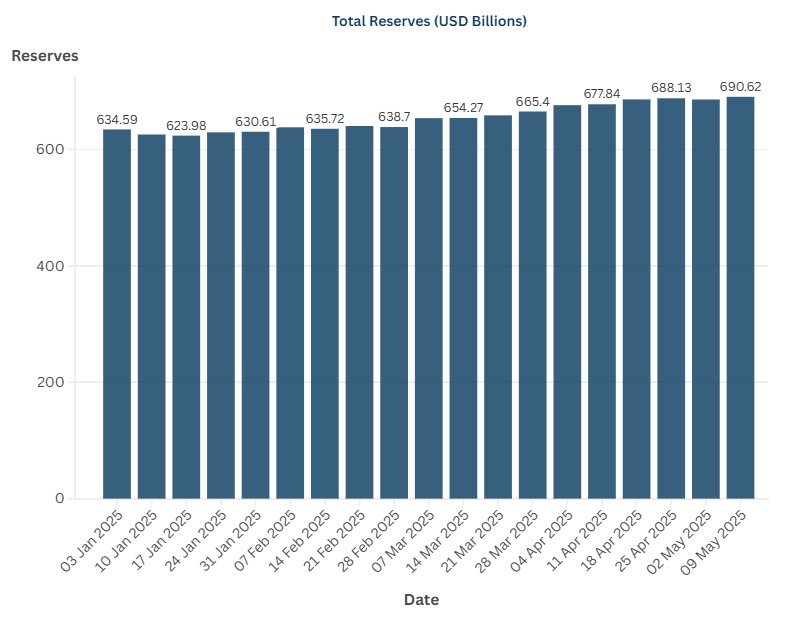
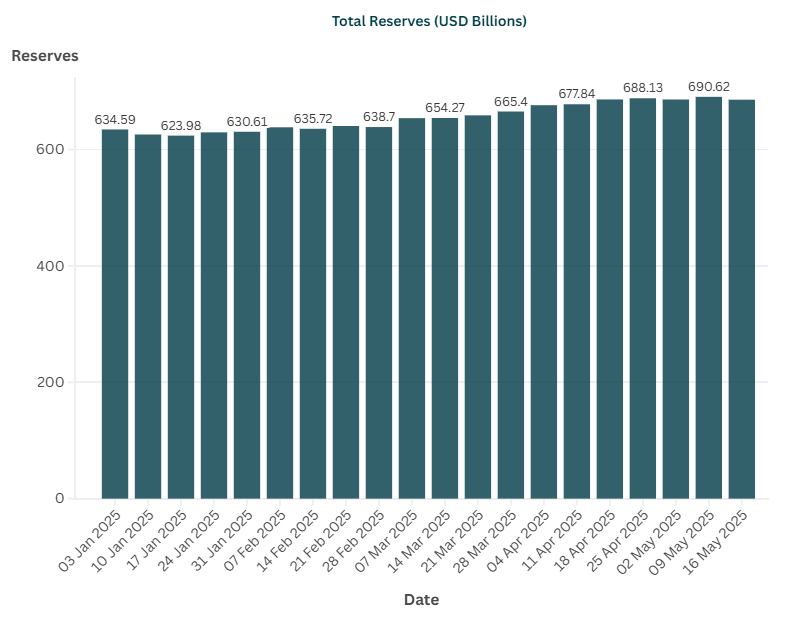
India’s foreign exchange reserves stood at a strong US$682.3 billion as of May 29, 2026, providing a significant buffer against external shocks. The RBI reiterated that it does not target any specific exchange rate level but remains prepared to intervene to prevent excessive volatility in currency markets.
The central bank emphasised that while India’s economic fundamentals remain strong, evolving global conditions, rising inflation risks, and geopolitical developments require continued vigilance. The MPC will remain data-dependent and closely monitor inflation, growth, and financial market developments before taking future policy decisions.
Source: RBI Governor’s Statement, Monetary Policy Committee Meeting